● live data infrastructure, built to run unattended

Empowering Data Solutions.
Generating Insights, Maintaining Data Pipelines
From Raw Ingestion to Production Analytics.
-We cover every layer of the modern data stack with engineering precision and operational decipline.

End-to-end data engineering CI/CD pipelines — ingestion, migration, warehousing, and analytics — delivered as versioned, tested, observable pipelines. Not a one-off script. A system someone else can maintain after we leave.

120+pipelines shipped
99.95%avg. uptime SLA
6.2 PBmigrated to date

Pipelines running in production on

AWSGCPAzureSnowflakeDatabricksBigQueryRedshift

stages

One pipeline, five stages.
We own all of them.

Every engagement runs through the same disciplined sequence — because skipping a stage is where data platforms quietly start to fail.

stage 01 — ingest ● ingest

Data Engineering

We design and build the pipelines that move data from wherever it's born to wherever it needs to work: batch ETL/ELT, streaming ingestion, change-data-capture, and event pipelines. Built in Python, orchestrated, retried, and alerting before they ever touch production.

  • Batch & streaming pipelines (Airflow, Kafka, Spark)
  • API, file, and database ingestion frameworks
  • Data quality checks built into every run
stage 02 — migrate ● migrate

Data Migration

Legacy database to cloud warehouse. On-prem to lakehouse. One vendor to another. We map schemas, reconcile every row, and cut over with a rollback plan — so migration day is uneventful, which is exactly the goal.

  • Schema mapping & lineage documentation
  • Zero/low-downtime cutover strategies
  • Row-level reconciliation & audit trails
stage 03 — model ● warehouse

Data Warehousing

Modern warehouse architecture on Snowflake, BigQuery, or Redshift — dimensional models or wide tables, whichever your access patterns actually need. Layered raw → staged → curated, with dbt managing every transformation as version-controlled SQL.

  • dbt-based transformation layers
  • Star schema & medallion architecture design
  • Cost & query performance tuning
stage 04 — analyze ● transform

Data Analytics

Curated data is only useful if someone trusts it enough to decide with it. We build the metrics layer, define the business logic once, and hand off models that answer real questions — not just dashboards that look busy.

  • Metrics layer & semantic modeling
  • Statistical & cohort analysis in Python
  • Self-serve analytics enablement
stage 05 — visualize ● deploy

Data Visualization

Dashboards built for the decision someone actually has to make, not for a screenshot. We design the view, wire it to the warehouse, and ship it in Looker, Power BI, Tableau, or a custom Python app when the off-the-shelf tool can't keep up.

  • Executive & operational dashboards
  • Looker / Power BI / Tableau implementation
  • Custom visualization apps (Plotly, D3, Streamlit)
underneath all five ● ci/cd

Engineering Discipline

Every pipeline above is built the same way: Python codebase, Git version control, peer-reviewed pull requests, and CI/CD that tests and deploys changes automatically. Infrastructure as code. No untracked changes in production, ever.

  • Git-based branching & review workflows
  • CI/CD with automated testing & rollback
  • Infrastructure as code (Terraform)

stack

The stack, laid out
like the architecture it is.

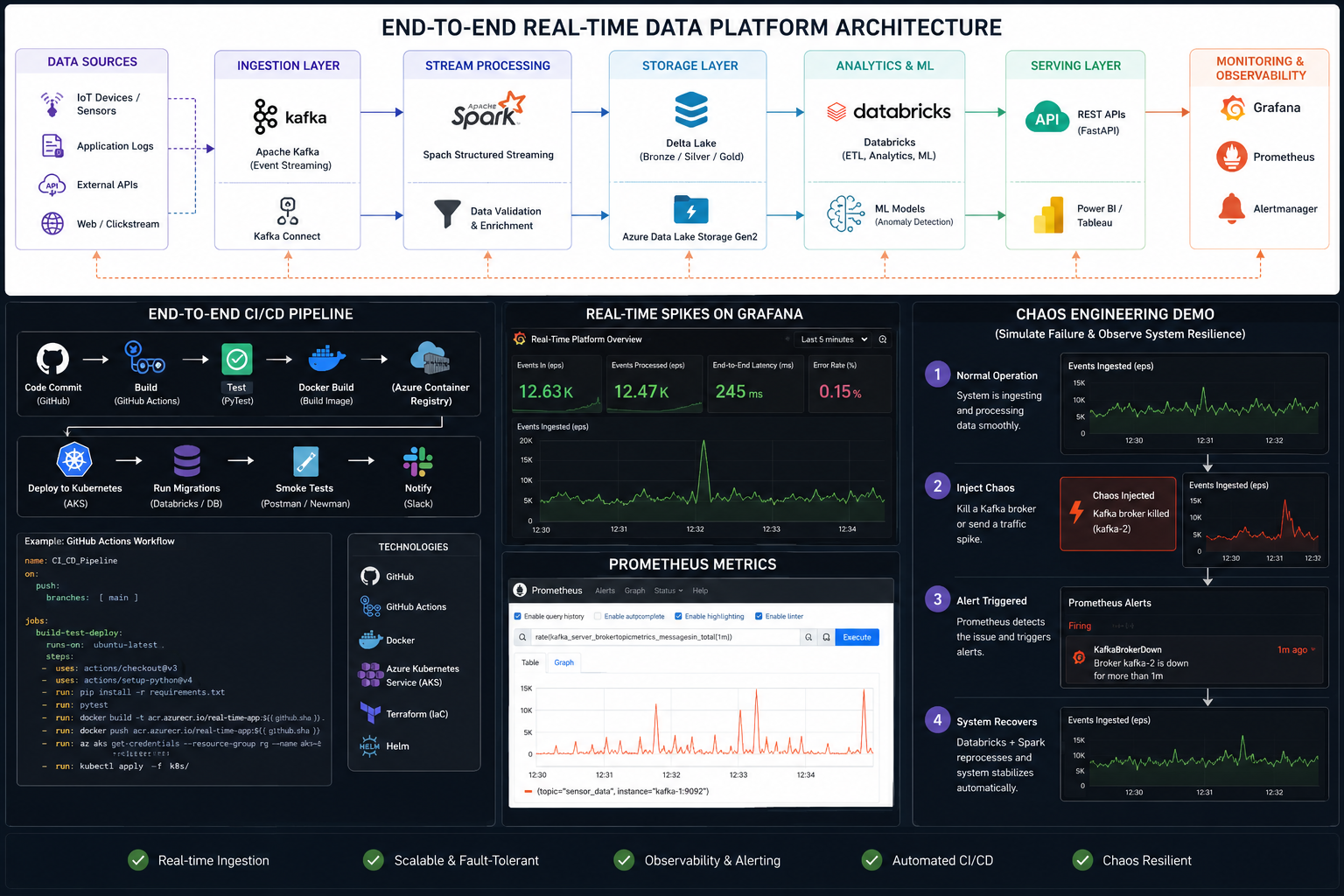
No logo soup. This is roughly how a request actually moves through a system we'd build for you.

sources
PostgreSQL / MySQL
REST & event APIs
Files (S3 / SFTP)
extract
orchestration
Apache Airflow
Python 3.12
dbt Core
load
warehouse
Snowflake
BigQuery
Redshift
serve
consumption
Power BI / Looker
Streamlit apps
Python notebooks
running underneath every column:
Git GitHub Actions / GitLab CI Docker Terraform pytest Great Expectations

workflow

How a change reaches
your warehouse.

The same Git → CI/CD discipline software teams take for granted, applied to data pipelines.

Scaled Image

engagement

What it's like to
work with us.

discovery

We map before we move anything

Source systems, data volumes, downstream dependencies, and the actual questions the business needs answered — documented before a single pipeline is written.

build

Two-week cycles, visible progress

Working pipelines in a shared repo from week one. You can watch the commit history, not just wait for a final reveal.

handoff

Documentation your team can run with

Architecture diagrams, runbooks, and a codebase your engineers can read on day one — no tribal knowledge left in our heads.

support

We stay until it's boring

Post-launch monitoring and tuning until the pipeline is reliable enough that nobody thinks about it. That's the actual finish line.

● pending awaiting your first commit

Tell us what your data
is doing right now.

A short call is usually enough to tell whether this is a quick fix or a full pipeline rebuild. Either way, you'll leave with a clearer picture than you came in with.

We reply within one business day — a human, not a bot.